Concrete projects can surprise you with their true weight, and guessing wrong can stall your renovation plans in Guelph. Knowing your concrete slab weight isn’t just about numbers… it affects delivery, disposal, and the safety of your structure. Use a concrete weight calculator to get clear estimates and plan smarter renovations in Guelph, then book a free site assessment with Da Maren Renovations to confirm loads and plan your next steps with confidence.
Understanding Concrete Weight
Grasping the weight of concrete is crucial for any renovation project. It influences everything from delivery to disposal.
Importance of Accurate Calculations
Accurate calculations ensure your project runs smoothly. Knowing the exact weight helps in planning logistics and maintaining safety. If you underestimate, you might face delivery hiccups or even structural issues. Accurate weighing prevents these problems and keeps everything on track.
Basics of Concrete Density
Concrete density is the key to calculating weight. Typically, concrete has a density of 2400 kg/m3. This figure is essential for converting volume to weight. By understanding this, you can avoid potential miscalculations. Many people overlook this aspect, risking the stability of their structures.
Factors Affecting Concrete Weight
Several factors can change the weight of your concrete. Moisture content and reinforcement are major players. Wet concrete can weigh more, while steel reinforcements add extra pounds. Recognizing these factors helps you adjust your calculations, ensuring a more accurate estimate.
Using the Concrete Weight Calculator

Utilizing a concrete weight calculator simplifies the process. It saves you time and reduces errors.
How to Calculate Concrete Weight
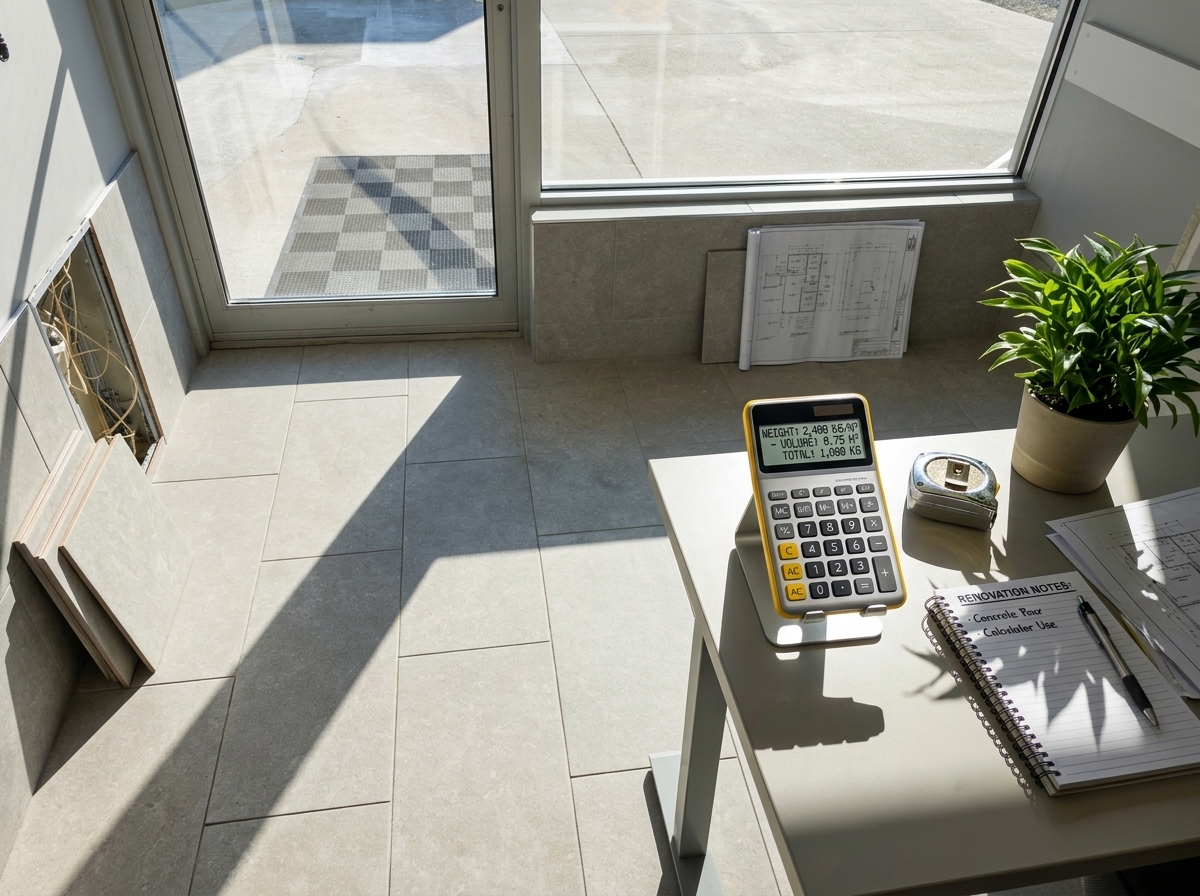
Calculating concrete weight is straightforward with the right tools. Start by measuring the volume of your concrete slab. Use the formula: length x width x height. Next, multiply by the density of 2400 kg/m3. This gives you the weight in kilograms or pounds, depending on your preference.
Converting Volume to Weight
To convert volume to weight, you need the density value. Once you have the volume, multiply it by 2400 kg/m3. This step transforms your measurements into a weight figure. It’s a simple process that prevents costly mistakes in your project planning.
Adjusting for Reinforcement and Moisture
Don’t forget to adjust for reinforcement and moisture. Adding steel bars increases the weight significantly. Similarly, moisture content can add to the overall load. Make these adjustments to ensure your calculations reflect the true weight. This attention to detail makes a big difference.
Planning Your Renovation Project

Concrete weight plays a crucial role in renovation planning. Let’s explore how it impacts various project aspects.
Effects of Concrete Weight on Delivery
Concrete weight directly affects delivery logistics. Heavy loads require special transport arrangements. Knowing the weight helps in choosing the right vehicle and planning routes. This foresight avoids delays and additional costs, keeping your project on schedule.
Structural Load Considerations
Understanding load implications is vital for structural integrity. Excessive weight can compromise the safety of your building. Calculating the load lets you make informed decisions about reinforcements and support structures. It’s a proactive approach to avoid structural failures.
Disposal and Environmental Impact
Disposing of concrete involves understanding its weight and environmental effects. Heavy waste requires specific disposal methods. Being aware of the weight helps in planning eco-friendly disposal routes and reducing environmental footprints. Proper disposal contributes to a greener planet.
Frequently Asked Questions
How do I calculate the weight of a concrete slab? Calculate the volume (length x width x height) and multiply by 2400 kg/m3 to get the weight. Adjust for reinforcement and moisture content as needed.
What factors affect concrete weight? Key factors include moisture content and reinforcement like steel bars. These can significantly alter the overall weight of the concrete.
Why is knowing concrete weight important? It impacts delivery logistics, structural integrity, and disposal methods. Accurate weight ensures safe and efficient project management.
What is the standard density of concrete? Standard density is typically 2400 kg/m3. This is used for converting volume to weight in calculations.
How does concrete weight affect transportation? Heavier concrete requires specialized transport vehicles and careful route planning to avoid issues during delivery.